Across the GCC, especially in the UAE, organizations are rapidly adopting AI to modernize operations, reduce costs, and improve decision-making. From procurement and logistics to finance and public services, AI-driven automation is delivering real efficiency gains.
But as adoption scales, a critical question is emerging “How can organizations move fast with AI while staying compliant, ethical, and regulator-ready?”
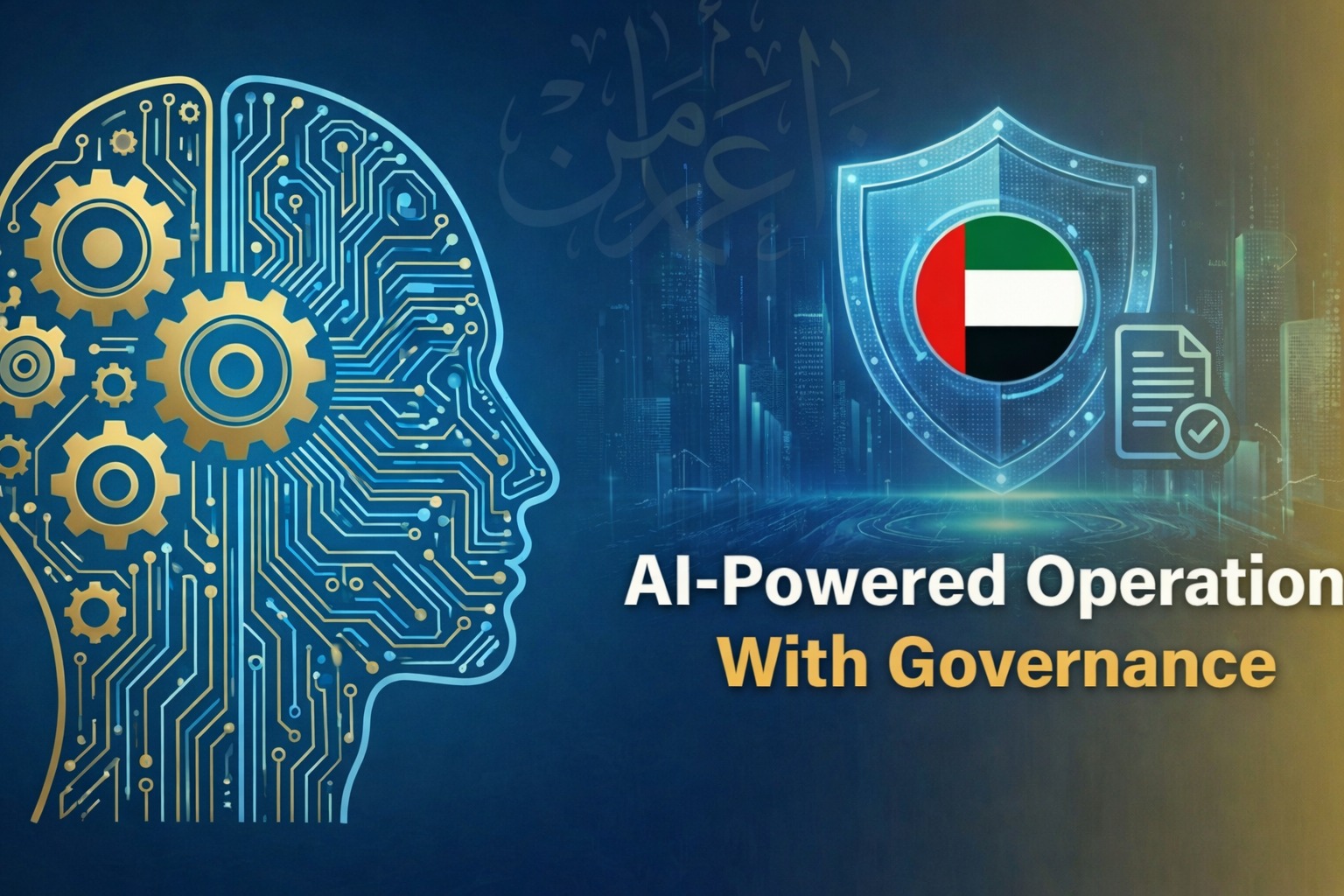
In today’s UAE market, AI success is no longer measured by performance alone. It is measured by how well AI systems align with governance, risk, and compliance (GRC) requirements. The era of black-box automation is over.
From Fast Automation to Governed Automation
The UAE’s national AI strategy and digital governance initiatives emphasize responsible, transparent, and human-centric AI. Governance must now be embedded into AI design, not added later.
This shift is driven by:
· UAE Personal Data Protection Law (PDPL)
· Sector-specific regulations (finance, healthcare, utilities)
· Procurement accountability requirements
· Cybersecurity and data residency obligations
AI systems influencing operational decisions, vendor selection, cost optimization, and workflow automation must now be explainable, auditable, and compliant.
Why Governance Is Now a Core Operational Requirement
Operational AI touches high-risk areas such as procurement approvals, financial controls, workforce optimization, and service delivery. Without governance, organizations face:
· Bias in automated decisions
· Lack of audit traceability
· Improper use or transfer of sensitive data
· Non-compliant AI vendors
In regulated markets like the UAE, compliance failure is not a technical issue; it is a business risk.
What Governed AI Operations Look Like
Leading GCC organizations are adopting governed automation frameworks built on five pillars:
1. Transparency & Explainability: AI decisions must be understandable to auditors, regulators, and leadership.
2. Data Governance & PDPL Alignment AI data must follow consent, minimization, retention, and sector-specific rules.
3. Vendor & Procurement Risk Management AI vendors are part of the compliance chain, ethical AI, cybersecurity, and data residency now matter.
4. Bias, Drift & Model Integrity Controls Continuous monitoring is required to manage bias, performance degradation, and model drift.
5. Auditability & Documentation AI systems must clearly show how decisions are made, what data is used, and how risks are managed.
Why the UAE Is Uniquely Positioned
The UAE combines high AI readiness with rapid regulatory maturity. Organizations are expected to lead by example, proving that innovation and governance can scale together.
This supports:
· UAE National AI Strategy 2031
· Digital government transformation
· Trust in automated services
· Long-term, sustainable AI adoption
Final Thought
The future of AI-powered operations in the GCC will not be defined by automation alone. It will be defined by how responsibly, transparently, and compliantly AI is deployed.
AI governance is no longer a constraint. “It is the foundation for sustainable operational intelligence.”